Chipotle's High Protein Menu: What to Order, and How to Build Your Own
Chipotle launched a high protein menu with orders from 15 to 81 grams of protein. Here is what is on it, the numbers behind each one, and how to build a higher-protein bowl yourself.
Chipotle is one of the few places you can order at a counter and walk out with 50 grams of protein for the price of a fast lunch. In December 2025 the chain made that official, launching its first High Protein Menu: a set of pre-built orders running from 15 grams of protein in a single taco up to 81 grams in a double-protein bowl.
The menu is a real convenience. It is also not the ceiling.
Because Chipotle publishes the nutrition of every scoop, you can out-build the menu for your own target in about thirty seconds at the counter. This is a guide to both: what the High Protein Menu actually contains, and how to assemble a higher-protein bowl than any of it when that is what you want.
What is on the Chipotle High Protein Menu
The menu is not new food. It is a set of named orders built from the same ingredients Chipotle has always served, chosen to push protein up and, on some of them, keep calories down. Here are the core options with their published numbers.
| Order | Protein | Fibre | Calories |
|---|---|---|---|
| Double High Protein Bowl | 81g | 11g | 760 |
| Double High Protein Burrito | 79g | 6g | 840 |
| High Protein, High Fibre Bowl | 46g | 14g | 540 |
| High Protein, Low Calorie Salad | 36g | 10g | 470 |
| High Protein Cup (chicken) | 32g | n/a | 180 |
| Adobo Chicken Taco | 15g | n/a | 190 |
Two of these, the High Protein, High Fibre Bowl and the High Protein, Low Calorie Salad, are marketed as GLP-1 friendly: lighter, higher in fibre, and built to sit comfortably on a smaller appetite. The Adobo Chicken Taco anchors the low end, and the High Protein Cup is a snack-sized serving of protein on its own, which we come back to below.
The honest summary of the whole menu is that it saves you a decision, not that it unlocks anything you could not already order. The numbers come from Chipotle’s published High Protein Menu. Tek is not affiliated with Chipotle; these figures are the restaurant’s own.
Why protein is the number worth chasing
Before optimising for protein, it is worth being clear on why. Two reasons hold up, and both matter more when you are eating fewer calories than usual.
The first is appetite. Protein is the most filling of the three macronutrients per calorie, which is why a high-protein meal tends to hold you longer than the same calories from carbohydrate or fat. A large review of the evidence put a practical number on it.
That per-meal figure is the useful part here. A single serving of Chipotle chicken is 32 grams of protein, so one bowl clears the threshold on the protein alone, before beans or anything else.
The second reason is muscle. When you eat in a deficit, enough protein is what protects the muscle you already have, so the weight you lose is mostly fat. The clearest estimate of how much you need comes from a meta-analysis of resistance-training studies.
For most people those two findings point to a daily protein target somewhere around 1.6 to 2 grams per kilogram, spread across meals of 25 grams or more. If you are setting that target as part of a fat-loss plan, our guide to how many calories to lose weight walks through the full budget, protein included. A Chipotle bowl is simply one convenient way to spend a large chunk of that protein in a single sitting.
The reason Chipotle is good at this: protein is cheap here
Every ingredient at Chipotle costs calories, but protein costs the fewest for what you get. Chicken is the standout, at 32 grams of protein for 180 calories, the best ratio on the menu. Here is where each protein lands.
| Protein (per 4 oz scoop) | Protein |
|---|---|
| Chicken | 32g |
| Barbacoa | 24g |
| Carnitas | 23g |
| Steak | 21g |
| Sofritas (plant-based) | 8g |
The practical consequence is that adding protein is one of the least expensive things you can do to an order. Asking for double chicken adds 32 grams of protein for 180 calories. Guacamole adds 230 calories for two grams. If you have a fixed calorie budget and want it to go as far as possible on protein, double protein is almost always the better spend.
You can watch this play out on our Chipotle nutrition calculator: toggle double protein and the protein line jumps while the calorie total barely moves, then add guacamole and watch the opposite happen.
How to build your own high-protein bowl
The High Protein Menu is one team’s answer. Yours can be higher, leaner, or cheaper depending on what you are after. The build is five decisions.
Start with a bowl, not a burrito
A flour tortilla is 320 calories, 50 grams of carbohydrate, and 600 milligrams of sodium before a single filling goes in. Ordering the exact same contents as a bowl removes all of it. This is the single largest calorie saving available at Chipotle, and it costs you nothing you came for.
Double the protein
This is the move that defines a high-protein order. Double chicken puts 64 grams of protein in the bowl for 360 calories. On its own that already beats most of the pre-built menu on protein, and you still have room for the rest.
Add both beans, or at least black beans
Beans bring protein and a lot of fibre for very little else. They are also what makes a bowl sit well, which is the same idea behind the GLP-1 friendly menu items. Black beans are the higher-fibre choice.
Fill the volume with vegetables and fresh salsa
Fajita vegetables, romaine, and the fresh tomato and tomatillo salsas are effectively free in calorie terms and make the bowl feel like a full meal. Load them up. They are where “high protein” quietly becomes “healthiest Chipotle bowl” without any effort.
Spend your remaining calories deliberately
Rice, cheese, queso, sour cream, and guacamole are the calorie-dense add-ons. None are off-limits, but each is a real cost: white rice is about 210 calories, guacamole 230, cheese and sour cream roughly 110 each. Pick the one or two you actually want and skip the rest.
Put those together, and a bowl of double chicken, black beans, fajita vegetables, fresh tomato salsa, and romaine clears 70 grams of protein for well under 700 calories, without appearing on any menu board. Add white rice if you want the carbohydrate. The point is that once you know the numbers, the menu becomes a suggestion rather than a limit. Build the exact one you want on the calculator and note it down for next time.
The High Protein Cup, for when a bowl is too much
The one genuinely new idea on the menu is the High Protein Cup: a four-ounce serving of adobo chicken or steak on its own, about 32 grams of protein for 180 calories, with no base and no toppings.
It is aimed at the moment when you want protein without a meal, after a workout or alongside something you brought yourself. It is also the cleanest illustration of the whole menu’s logic, which is that the protein was always the efficient part of a Chipotle order. The cup just serves it without the rest.
The published numbers are averages, not measurements
One caution, because it is the same caution that applies to any calorie figure. Chipotle assembles every order by hand, so the scoop that lands in your bowl is not identical to the one printed on the nutrition sheet. A generous portion of rice or a light one moves a real meal by 50 to 100 calories, and the same is true for cheese, guacamole, and the proteins.
That does not make the numbers useless. It makes them a good estimate, which is exactly how you should treat them: accurate enough to compare orders and plan a day, not a laboratory measurement of the food in front of you.
The bigger point is that Chipotle is the easy case, because the numbers are published at all. Most meals you eat do not come with a nutrition sheet, and estimating those is a harder problem. We wrote about where photo-based estimates hold up and where they fall apart in can a photo really count calories. A restaurant that publishes its data is a gift; build the habit of using it.
A high-protein bowl still has to fit your day
Protein is a supporting target, not the whole plan. Total calories are what decide whether you lose, hold, or gain weight, and a 900-calorie bowl with 70 grams of protein is still 900 calories. The trick is to slot a high-protein order into a budget you have already set, rather than letting a good protein number talk you past your calories for the day.
Four numbers, one daily budget
A deficit is built, not guessed.
- 1The baseline
Resting burn
What your body uses at rest
- 2Your maintenance
Add movement
Daily activity, not workouts to spend back
- 3The lever
Subtract a little
Around 550 fewer calories a day
- 4What you eat
Your daily budget
The number you spend down, never below a floor
If you have not set that daily number yet, the calorie deficit calculator will estimate your maintenance and give you a target for losing, holding, or gaining, protein included. A Chipotle bowl then becomes one line in that budget: a large, satisfying, protein-dense line, but a line all the same. When you are eating at maintenance rather than cutting, the same logic applies in reverse, which we cover in the guide to finding your maintenance calories.
Designed for correction, not blind trust
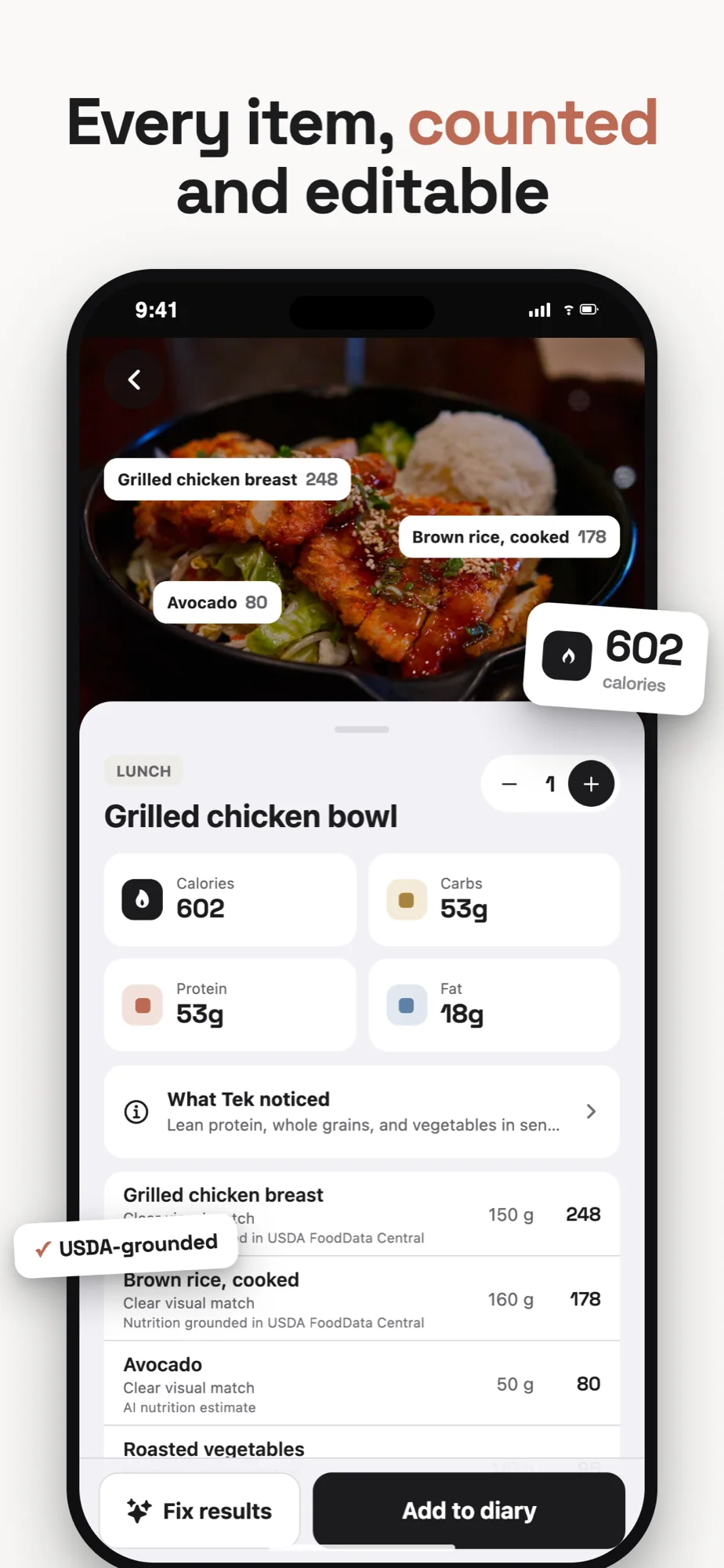
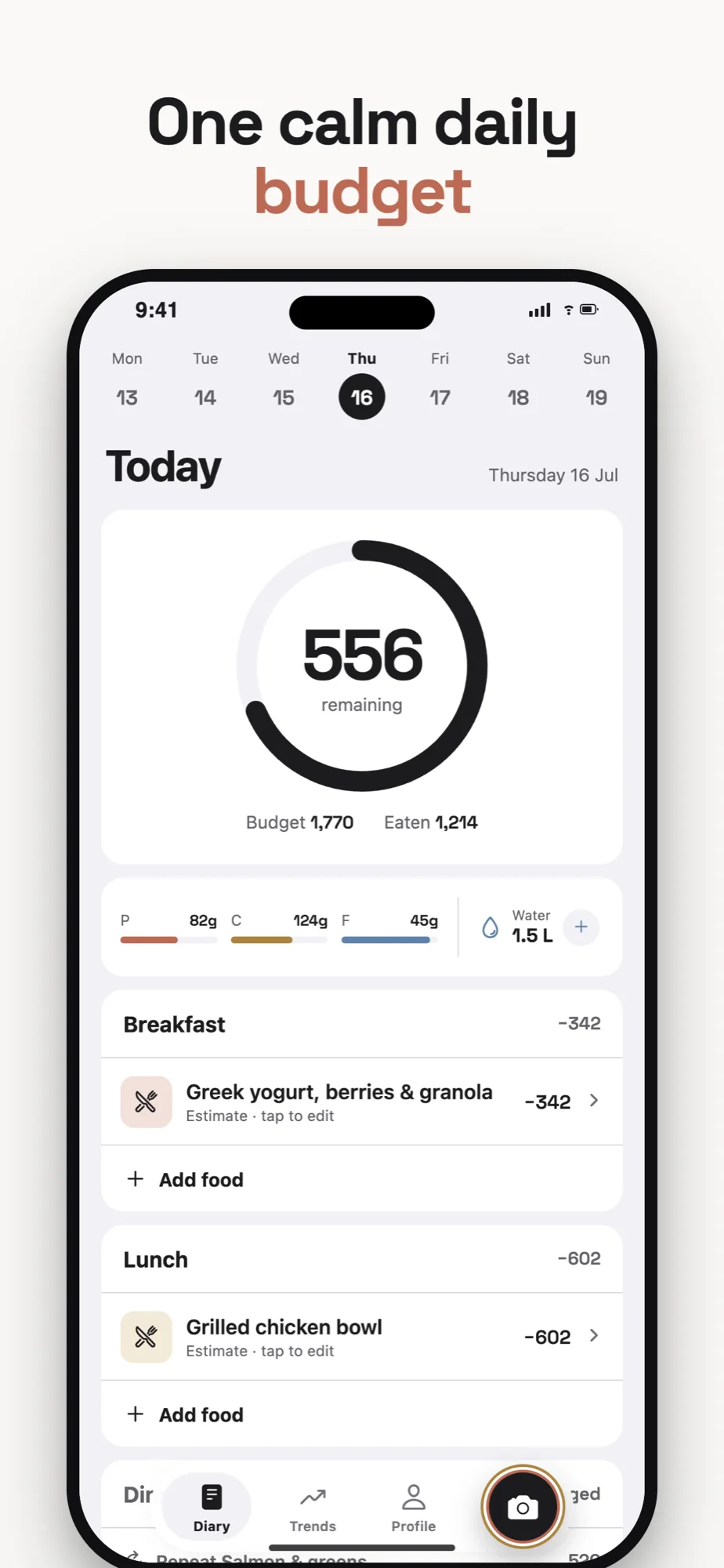
Tek shows the foods behind the number.
Review each item, change a portion, add a missing sauce, then return to one calm daily budget. The estimate starts the log. You finish it.
- Itemized foods and portions
- USDA grounding when available
- Plain-language fixes
- Every estimate stays editable
The practical answer
Chipotle’s High Protein Menu is a convenience worth knowing about, especially the GLP-1 friendly bowls and the protein cup, which package the chain’s most useful trait into a single order. But the menu is not doing anything you cannot do yourself.
Order a bowl instead of a burrito, double the protein, lean on beans and vegetables, and spend your remaining calories on the one or two extras you actually want. That build will meet or beat the printed menu on protein for your exact calorie target, every time. The numbers are all public, and the difference between a 600-calorie bowl and a 1,200-calorie one is a handful of scoops you get to choose.
Know the scoops, and you never need the menu to tell you what to order.
Frequently asked questions
How much protein is in a Chipotle bowl?
It depends entirely on the build, but a typical chicken bowl with rice, beans, salsa, and cheese lands around 40 to 50 grams of protein. Doubling the chicken pushes a bowl past 70 grams. A single serving of chicken is 32 grams, so protein adds up quickly at Chipotle even before beans.
What is on the Chipotle high protein menu?
Chipotle's High Protein Menu, launched in December 2025, is a set of pre-built orders from 15 to 81 grams of protein. It includes the Double High Protein Bowl (81g), the Double High Protein Burrito (79g), a High Protein, High Fibre Bowl (46g), a High Protein, Low Calorie Salad (36g), a High Protein Cup (32g), and an Adobo Chicken Taco (15g).
What is the highest protein order at Chipotle?
Among single proteins, chicken carries the most at 32 grams per serving, followed by barbacoa at 24, carnitas at 23, and steak at 21. The highest-protein bowl on the official menu is the Double High Protein Bowl at 81 grams, but a build-your-own bowl with double chicken and both beans can approach the same figure for fewer calories.
What is the Chipotle high protein cup?
The High Protein Cup is a four-ounce serving of adobo chicken or steak on its own, roughly 32 grams of protein for about 180 calories, with no rice, beans, or toppings. It is designed as a protein-only snack rather than a meal.
Is the Chipotle high protein menu good for weight loss?
It can be, if the order fits your calorie budget. The High Protein, Low Calorie Salad and the High Protein, High Fibre Bowl are the leanest options and are built for smaller appetites. A high-protein bowl helps most by keeping you full on fewer calories, but total calories, not protein alone, are what drive weight loss.
Which Chipotle high protein items are GLP-1 friendly?
Chipotle markets two of them as GLP-1 friendly: the High Protein, High Fibre Bowl (46g protein, 14g fibre, 540 calories) and the High Protein, Low Calorie Salad (36g protein, 10g fibre, 470 calories). Both are higher in fibre and lighter in calories, which suits a reduced appetite.